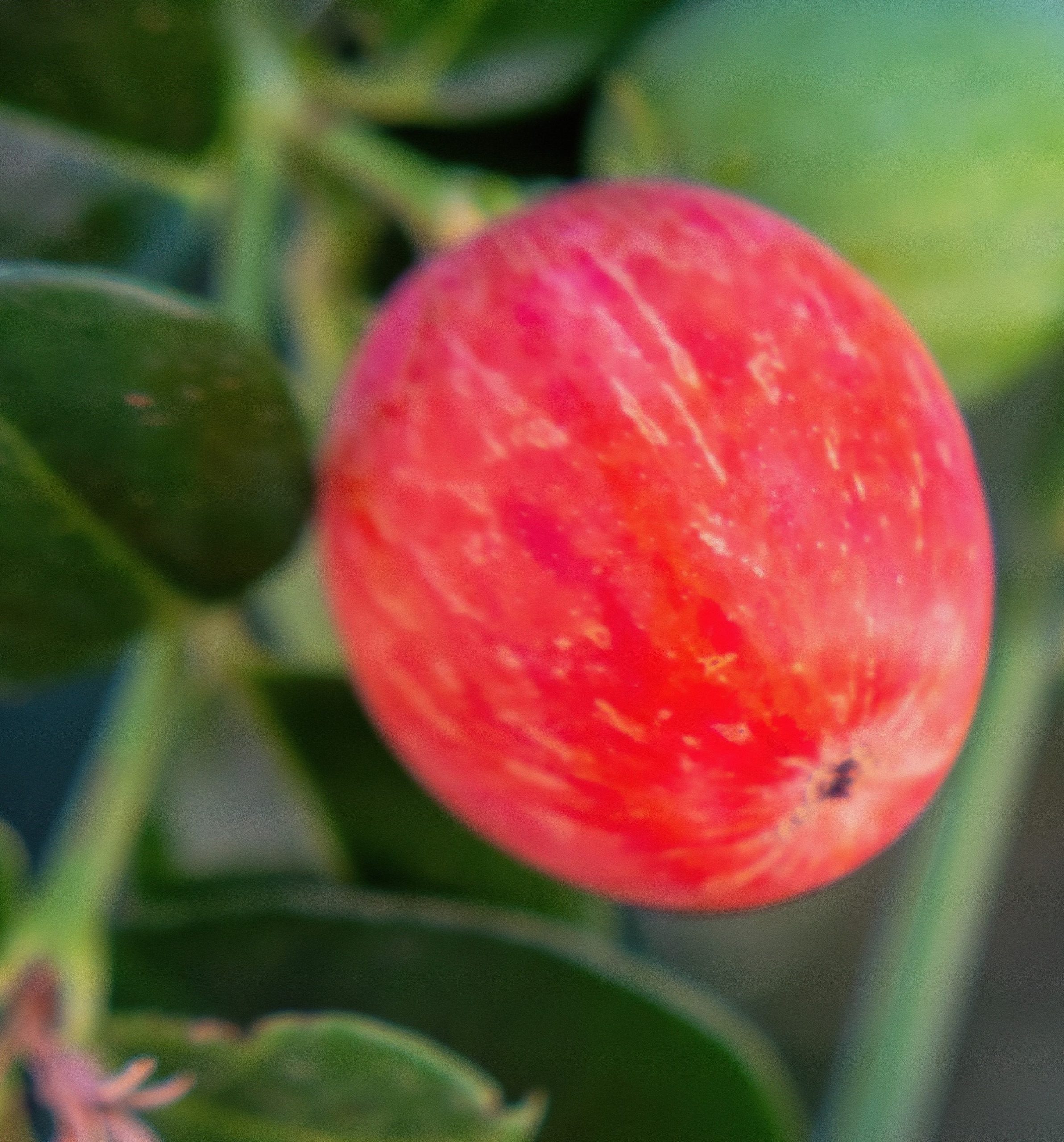
It is a shrub that grows 1.8–4.5 m (5.9–14.8 ft) in height and has dense foliage.[17][18] Its leaves are 5–10 cm (2.0–3.9 in) long, 2.0–3.7 cm (0.79–1.46 in) wide, and glabrous below. They are clustered at the ends of the branchlets. The flowers are white. It carries red, 2 cm (0.79 in) long fruits. Each fruit contains one seed about the size of a coffee bean.[5]
The plant grows best in soils with a pH as low as 4.5 to 5.8, in an environment free from frost and in partial shade with high humidity. It is tolerant of drought, full sunshine, and slopes.[5]
The seeds need 14 to 21 days to germinate. A spacing of 4 m (13 ft) between plants is suggested.[5]
The plants first bear fruit after growing about 3–4 years,[5] and produce two crops per year, after the end of the rainy season. This evergreen plant produces small, red berries, while white flowers are produced for many months of the year.
In Africa, leaves are attacked by lepidopterous larvae, and fruits are infested with larvae of fruit flies. The fungus Rigidoporus microporus has been found on this plant.[5]
Transgenic tomato plants have been developed in research projects that produce miraculin.[19][20]